
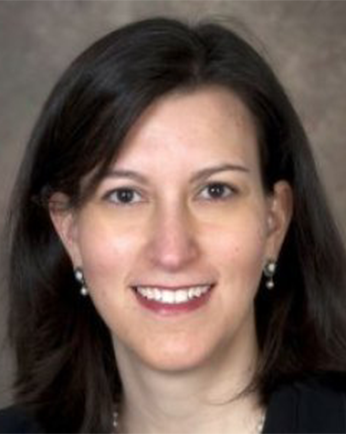
Professor University of Delaware
Computing losses over time with an ensemble of hazard event sequences
Co-Author: Jingya Wang, Linda Nozick
Abstract: Regional disaster loss modeling has historically been done using either a deterministic or probabilistic approach. In the former, losses are computed for a single earthquake, hurricane, or other hazard event scenario. In the latter, the losses with a specified return period are computed. In this presentation we propose that, in some cases, it is necessary to compute probabilistic sequences of event losses over a long timeline. For relatively frequent hazards such as hurricanes and floods, the timing and clustering of events across decades can strongly influence recovery processes, cumulative losses, public expenditures, and insurer solvency. A series of hurricanes in quick succession, for example, can make it much harder for a community to recover or an insurer to remain solvent than the same hurricanes evenly spread over a long time period. Adding the time dimension to move to sequences of loss events makes an already computationally intensive process even more so. To address this challenge, in this presentation, we present a new method to generate a computationally efficient suite of multi-decade timelines of hurricane events. The approach could be adapted to other hazards and to consider non-stationarity.
Professor La Sapienza University of Rome
An International Alliance for a Step-Change National Risk Management Digital Framework and Dashboard
Abstract: The urgency of a coordinated and comprehensive National Plan for the reduction of seismic risk and the integrated seismic-energy rehabilitation of the Italian building stock, able to combine architectural, functional, energy aspects, overall seismic safety and sustainability, is increasingly evident.
This presentation will provide an overview of the unprecedented effort and ongoing activities carried out by an large interdisciplinary team of structural, geotechnical and aerospace engineers, physicians, computer scientists, geologists, geophysicists, economists as part of a wider PNRR (National Recovery and Resilience Plan) – National Research Centre on High Performance Computing, Big Data and Quantum Computing (CN1) research project, within the Spoke 5 “Environmental and Natural Disasters”.
Mid-term objective is the development of an integrated framework for multi-scale and multi-refinement risk assessment and mitigation strategies, supporting a long-term coordinated National Plan for (focusing on earthquake hazard) seismic-energetic rehabilitation of the building stock and infrastructures
A call for an International Alliance merging efforts, knowhow and experiences towards a common goal: pass on to the next generations a safer, more resilient and sustainable community.