
Workshops
Abstracts Due:
Jan 8, 2026 (Extended)
Travel Assistance Requests Due:
Jan 8, 2026
Early Bird Discount Ends:
Mar 16, 2026
Registration Closes (space is limited):
April 13, 2026 (Extended)
Looking for info on the 2025 Computational Symposium?
Looking for info on the 2024 Computational Symposium?
Looking for info on the 2022 SimCenter Symposium?
Tag the Symposium with
#NHERICompSym
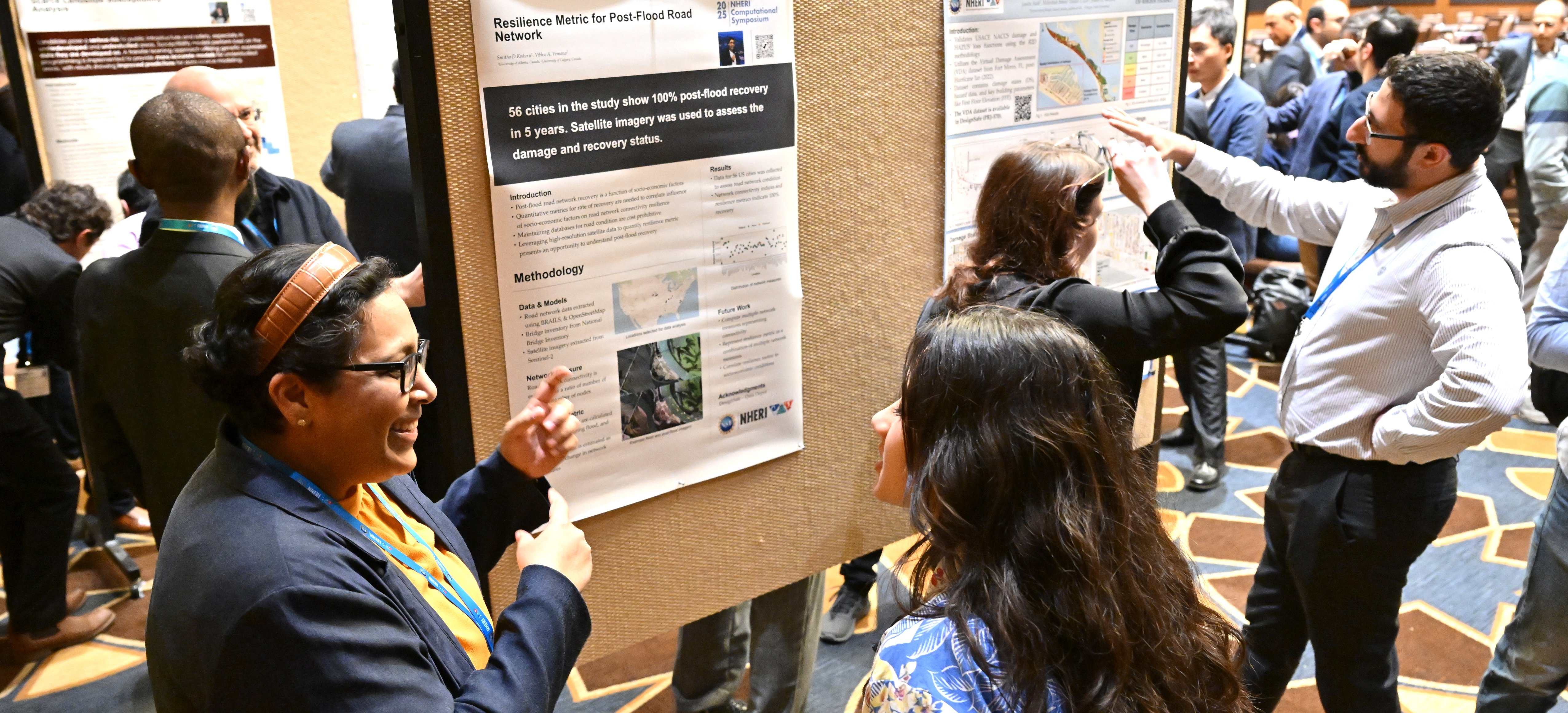
Photo credit: Todd Cheney
The fourth annual NHERI Computational Symposium is brought to you by NHERI SimCenter in collaboration with RAPID and DesignSafe. The Symposium is the premier event for exchanging ideas, recent work, and broader impacts within the natural hazards research community. It provides a unique platform for students, researchers, and professionals to discuss and share their recent research efforts and industry applications that employ computational modeling and simulation to understand and reduce natural hazards risks.
The event aims to cultivate community and future partnerships through various networking opportunities, fostering collaborations, and knowledge sharing among attendees. Bring your work, discover new capabilities within a shared infrastructure, and leave with ideas to make your research more reusable.
Pre-symposium workshops begin Wednesday, May 27, 2026 on the UC Berkeley campus. Workshops will provide introductions to NHERI resources and advanced user support.
The Symposium will be a two day event starting on Thursday, May 28, 2026 at the Grimes Engineering Building. The first day includes plenary presentations, focused technical sessions, and an informative poster session/early evening reception. The second day, Friday, May 29, will include focused technical sessions.
| Pedro Arduino, Committee Chair University of Washington |
Ellen Rathje University of Texas at Austin |
| Mehrshad Amini University of Rhode Island |
Milad Roohi University of Nebraska-Lincoln |
| Jeffrey Berman University of Washington |
David Roueche Auburn University |
| Luis Ceferino University of California, Berkeley |
Matt Schoettler University of California, Berkeley |
| Tim Cockerill University of Texas at Austin Texas Advanced Computing Center |
Seymour M.J. Spence University of Michigan |
| Greg Deierlein Stanford University |
Elaina Sutley The University of Kansas |
| Matt DeJong University of California, Berkeley |
Sang-ri Yi Rice University |
| Negar Elhami-Khorasani University at Buffalo |
Adam Zsarnóczay Stanford University |
|
Early Bird
(Ends Mach 16)
|
Online
(Ends Apr 2)
|
Onsite* |
|
|---|---|---|---|
|
General |
$450 |
$550 | $750 |
|
Student: Full time enrolled |
$150 | $350 | $750 |
* Limited onsite registration is available for those on our waitlist. To reserve a spot, contact us at NHERI-SimCenter@berkeley.edu. “Walk-in” registration is not available,
All Symposium registrants will receive a confirmation email with the following header details:
Subject: Confirmation for 2026 NHERI Computational Symposium
Sender: NHERI Computational Symposium Organizing Committee
Reply-to email: nheri-simcenter@berkeley.edu
If you do not receive a confirmation, please contact Symposium support at the SimCenter by email to nheri-simcenter@berkeley.edu. Please reference the 2026 NHERI Computational Symposium Registration in the subject line.
This confirmation email includes a link to your registration record where you can retrieve a receipt.
Student registrations are non-refundable. For General registrations, cancellations must be submitted via email to the SimCenter by April 23, 2026. A processing fee of $50 will be deducted from all refunds. Cancellation requests should be emailed to nheri-simcenter@berkeley.edu. No refunds will be issued for cancellations received after April 23, 2026.